

Wine Bottle Sizes: EWWines Ultimate Guide – From Piccolo to Nebuchadnezzar!
Posted by EWWines on 12th Dec 2025
Wine comes in many shapes and sizes, but few topics in the wine world spark as much curiosity (and conversation!) as bottles formats. Whether choosing a romantic picnic on a Cornish beach requiring a half bottle for two to share, a magnum for a dinner party, or a show stopping Nebuchadnezzar for a milestone celebration, each size carries its own story, benefits and quirks.
We are exceptionally proud of our diverse range of large format bottles at EWWines, and we believe size of your bottle absolutely matters. This Christmas be sure to consider selecting from our larger format bottles to make that statement talking point!
We will explore the world of bottle size, the legendary Magnum effect, why big bottles are undeniably fun and how the big format names vary across wine regions of the world. By the end of this blog, we hope that you feel the same as us and look for the right bottle size, for the right occasion.
Why Bottle Size Matters
Not just a novelty, wine bottle size influences:
Ageing Potential
Large format bottles age more slowly and (hopefully) gracefully than smaller format bottles. A big opening statement, which also depends on the quality and the concentration of flavours in the wine and the structure of acidity, alcohol, sugars and tannins which will dictate the ageing potential too.
Aroma and Flavour Development
More glass and liquid in each bottle relative to air and size of the cork = slower oxidation. Oxidation and time are the key components when it comes to flavour development. Over time, primary fruit flavours in the wine hopefully develop into tertiary characters when stored in the right environment. Patience is rewarded in wine!
Practicality
Different occasions call for different volumes of wine as mentioned at the beginning of the article.
Presentation
Because sometimes, you simply want the “wow” factor.
Standard Wine Bottle Size Guide (and what they’re best for!)
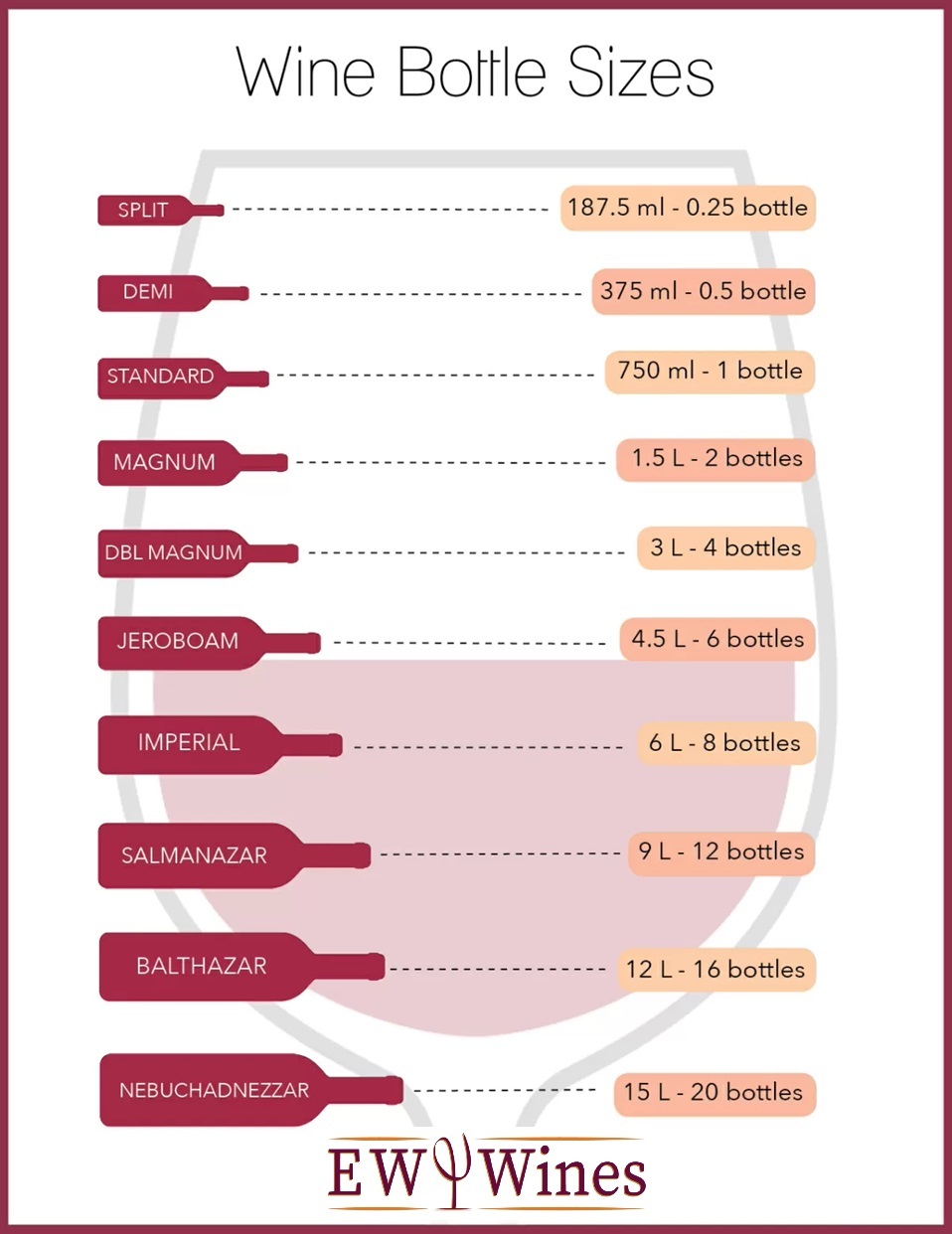
Piccolo (187ml)
Also known as the quarter bottle or split, typically used for single servings. Perfect for picnics, hotel minibars and on-the-go sipping.
Half Bottle / Demi (375ml)
Ideal for two glasses of wine. Perfect for bubbles, dessert wines or to try out a premium bottle before committing to a full bottle!
Standard Bottle (750ml)
The universal format. Roughly six small glasses of wine depending on the server and glass. The 750ml size became standard partly for practicality and partly because it works well for bottle ageing.
Magnum (1.5L)
Two standard bottles. Favoured amongst wine collectors, wine lovers and sommeliers and the star of the article (see ‘The Magnum Effect’ below). Fantastic for dinner parties and cellaring. In the famous words of Sir Winston Churchill; “The Magnum is the perfect size for two drinkers to share, if one is not drinking.”
Double Magnum or Jeroboam (3L)
Four standard bottles...but here is where the confusion starts because originally the old testament Kings name, Jeroboam, refers to 3 Litres in Champagne and Burgundy, more on that later.
Rehoboam (4.5L)
Six standard bottles. Rare outside of Champagne. Perfect for BIG celebrations!
Bordeaux Jeroboam (5L)
6.75 standard bottles... in Bordeaux only. In Champagne and Burgundy, a 5L bottle does not exist or have a biblical name.
Methuselah or Imperial (6L)
Eight standard bottles, or two Double Magnums. Known as Imperial in Bordeaux. Methuselah was a biblical patriarch who lived for almost 1000 years – fitting for a bottle size associated with age-worthy wine.
Salmanazar (9L)
Twelve bottles of wine, a full case in one bottle!
Balthazar (12L)
Sixteen standard bottles. Name of one of the Three Wise Men. Perfect for weddings or landmark celebrations.
Nebuchadnezzar (15L)
Equivalent to 20 bottles. Named after the King of Babylon. An undeniable showstopper every time, expect admiration and sore wrists.
Solomon or Melchoir (18L)
Twenty four standard bottles of wine. Solomon in Champagne, Melchoir in Bordeaux and other famed still wine regions.
The Magnum Effect: Why Can Bigger Bottles Age Better?
The “Magnum Effect” refers to the phenomenon where wine store in a magnum (1.5L) ages more slowly and gracefully shall we say than the standard 750ml bottle.
Why?
Simply because of oxygen exposure.
A bottle’s cork allows a tiny, controlled amount of oxygen to seep in over time. Remarkably, whether the wine is in a 750ml bottle or a magnum or bigger format even, the oxygen entering through the cork is the same. That means;
More wine (volume) + same oxygen exposure = slower, more even ageing.
This slower oxidation results in:
- Greater Complexity
- Fresher fruit character over time
- Better longevity
- More elegant tannin evolution (in red wines)
Therefore, it is widely considered that the truest expression of a wine is often found in Magnum.
The Fun Factor - Big Bottles Bring Big Smiles!
Let’s be honest – large bottles are not just about chemistry. The are show-stoppers, conversation starters, and dare we suggest instant mood lifters!
- They look impressive – Whether a Magnum on the dinner table or a Balthazar at a wedding, big bottles turn heads and are the perfect centre piece.
- They elevate the occasion – each Magnum of Champagne transforms a moment into a celebration.
- Perfect to share – one bottle, one cork, one shared experience.
- They keep wine cooler for longer – more volume equals thermal stability.
Simply put, big bottles are fun because they break the norm – and we all love a touch of theatre.
Big Format Names by Region: Bordeaux vs Burgundy vs Champagne
One of the quirks in wine terminology is that the same bottle format can have different names depending on the region, so here is our quick summary to explain the nuance's:
In Bordeaux use “Imperial” is 6L instead of the Burgundy “Methuselah”.
Champagne’s “Jeroboam” is 3L, while Bordeaux’s is 5L.
Champagne use “Rehoboam” 4.5L, while Burgundy and Bordeaux do not.
Why the Biblical Names?
Many of the large formats are named after biblical kings and patriarchs. This was a tradition that emerged in the 18th Century Champagne marketing - their idea was simple: big bottles deserve big names!
The names add a sense of grandeur, history, storytelling qualities and theatre which perfectly align with larger format bottles.
Which Bottle Size Should I choose?
Now you are an expert in bottle sizes, here are some of our top recommendations of wines in different formats.
Picolo – La Vaca Gorda 187ml - £3.25 Deep and vibrant Argentinian Malbec perfect for a single serve.
Half Bottle – Nyetimber Classic Cuvee 375ml - £19.95 All occasion English Sparkling Wine. The perfect two glass sharer.
Magnum – Ruinart Blanc de Blancs Magnum - £199 Just the perfect expression of Chardonnay. Taught, mineral with toasty almond and soft honey on the finish.
Jeroboam – Ayala Brut Majeur 3L - £195 Ayala was taken over by its neighbour Bollinger in 2005 and have been doing incredible things ever since.
Methuselah – Roda Reserva Rioja 6L - £340 - A standout vintage 2015, this is an absolute treat from a well-respected Rioja producer Bodegas Roda.
The Final Pour: Big Bottles, Big Personality?
From tiny Piccolos to towering Nebuchadnezzars, EWWines has them all! Wine bottle sizes offer far more than varying quantities – they shape how we experience wine. The Magnum Effect enhances ageing, large formats add panache to any gathering, and regionally named traditions enrich wine culture with history and storytelling.
Whether you are exploring bottles for your cellar, or planning a memorable celebration, there is a format for every moment.
If you are looking for magnums or larger formats for this Christmas or any time for that matter, EWWines are proud to offer a vast selection – because sometimes, bigger really is better.